
Live Casino: Dealers, Streams and Betting Windows
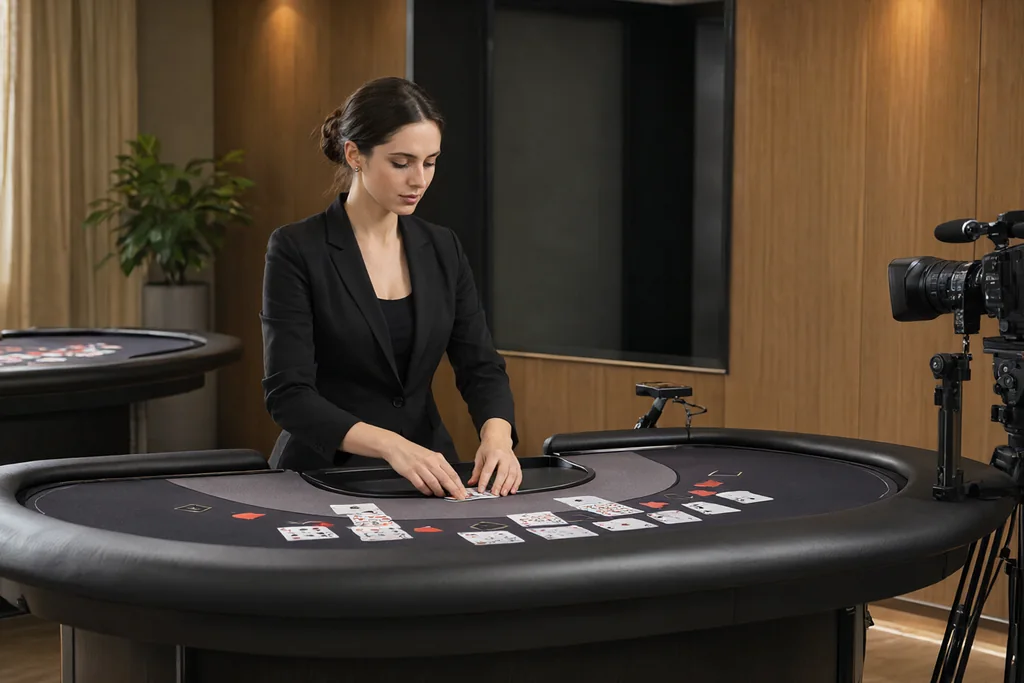
Live casino games replace random number generators with a dealer, a physical table and a camera. The result feels closer to a land-based floor than anything else in an online lobby, but the mechanics behind it are specific and worth understanding. This guide covers how streamed tables work at 1xBet, what the interface controls and where the limits sit.
What a live table actually is
A live table is a studio with a real dealer, real cards or a real wheel, and several cameras. The video is encoded and sent to your browser, while a separate interface handles your bets and balance. The two streams run in parallel, which is why the picture can occasionally lag behind the numbers.
Studios operate the equipment and the dealers; the operator provides the lobby, the account and the payments. That split matters when something goes wrong, because a frozen video and a rejected bet are handled by different teams.
The 1xBet live lobby groups tables by game, by studio and by stake level, and the stake filter is the quickest way to find a table that fits. A table listed under a low limit usually keeps that limit across bet types, while high-limit tables often require a larger first bet.
How a round runs from your side
Each round has a betting window, shown as a countdown in the interface. Bets placed inside the window are accepted and appear on the virtual layout; bets after it closes are usually refused rather than queued. The dealer then plays the hand or spins the wheel, and results are settled automatically.
Because the dealer works in real time, there is no way to pause a table. If you need to step away, leave the table rather than leaving a balance exposed to the next rounds. Most interfaces show the remaining time clearly enough to make that decision between rounds.
Settlement is automatic once the dealer finishes, and winnings appear in the balance without any action from you. A bet that was refused during the window leaves no trace in the round, so a missing stake usually means the window had already closed.
The interface elements that matter
- Betting grid: where chips are placed, matching the physical layout.
- Countdown: the time left before bets close.
- Limits panel: minimum and maximum for each bet type.
- History: recent results, descriptive only.
- Chat: moderated text with the dealer and other players.
The limits panel is the most overlooked element. A table can carry a low minimum and a maximum that is far below what you intended to stake, and the two figures are set per bet type rather than per table.
Stream quality, latency and fair play
Video quality depends on your connection more than on the studio. A stable wired connection usually produces a sharper picture than a busy mobile network, and lowering the stream resolution often fixes stutter without affecting the game. If the video freezes, the round continues on the studio side.
Fairness at a live table rests on physical equipment and studio procedures rather than on software seeding. Cards are shuffled in view or with a machine, wheels are checked, and results are recorded. The platform's terms describe how recorded rounds and disputes are handled.
The stream is usually adaptive, so it lowers quality instead of stopping when bandwidth drops. On mobile, battery saver and background apps are the common causes of stutter, and landscape orientation tends to give the layout more room for the betting grid.
Limits, stakes and table selection
| Table type | Typical pace | What suits it |
|---|---|---|
| Live blackjack | Moderate, decision-based | Players who want to think each hand |
| Live roulette | Fast, fixed betting window | Short sessions with small stakes |
| Live baccarat | Fast, no decisions | Simple bets and quick rounds |
| Game shows | Variable, presenter-led | Entertainment over strategy |
Choosing a table is mostly a question of matching pace to budget. A fast table with a high minimum burns through a session quickly, while a slower table with a low minimum gives the same budget far more rounds.
Registration, balance and practical setup
Live tables run on the same account as the rest of the casino, so no separate sign-up is needed. Deposits and withdrawals follow the methods listed in the payments section, and limits are set at account level rather than per game.
Before joining a table, check three things: the table minimum against your budget, the betting window length against your connection, and the specific rule variants in play. Those three checks take under a minute and prevent most of the frustration players report.
Some studios ask for identity verification before a first withdrawal, which is a standard step rather than a table-specific one. The registration guide covers the documents usually requested and how long the check tends to take.
A short break between sessions is more effective than a rule about how many rounds to play. Leaving the lobby entirely for a few minutes breaks the sense of continuity that makes live tables hard to step away from.
Responsible use of a live lobby
Live tables are designed to feel continuous, and continuity is the main risk. Rounds arrive without a natural break, so the session has no built-in stopping point unless you create one. Set a time limit as well as a spend limit, and treat both as fixed.
Use the account's deposit and loss limits rather than relying on willpower, and take breaks away from the screen. The games section offers a useful contrast: software titles are available on demand, which makes stepping away from a live table considerably easier.