
Blackjack, Roulette and Baccarat: How the Tables Differ
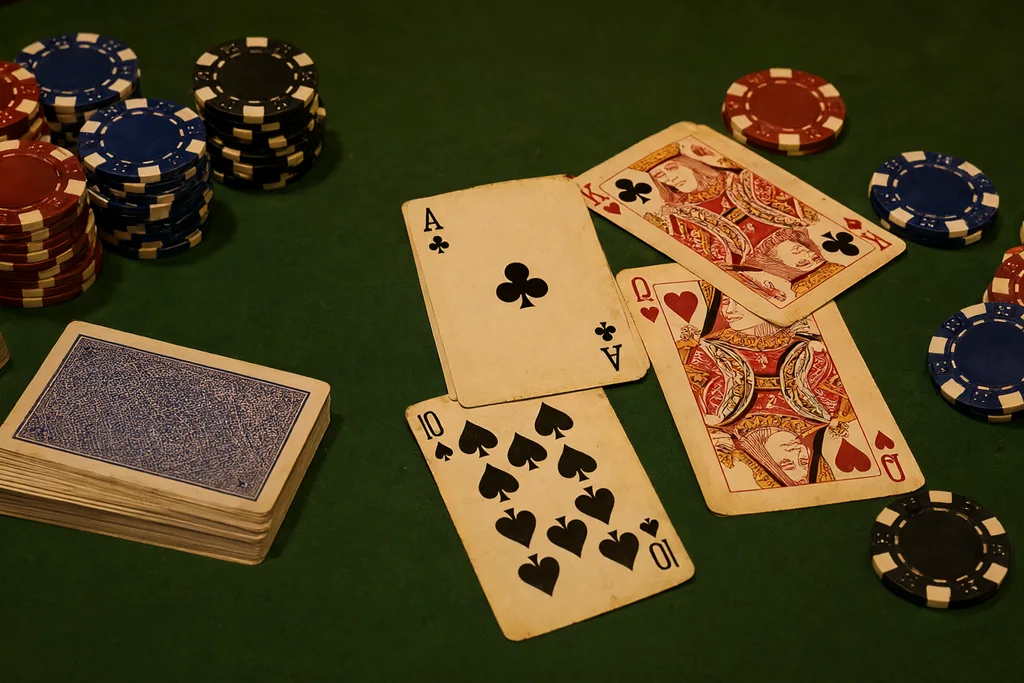
Table games sit between the noise of the slot lobby and the slower pace of a poker room. Blackjack, roulette and baccarat are the three pillars of the category, and each one rewards a different kind of attention. This overview explains how the tables are organised in the games section at 1xBet and what to check before you sit down at one.
What counts as a table game
The label covers card and wheel games dealt by software or by a person on a stream. Blackjack, roulette, baccarat, poker variants and several dice games all belong here, and each has its own rules screen. The category is defined by the shape of the game rather than by the stakes.
Software tables resolve each hand through a random number generator, while live tables use physical cards and wheels. The rules can be identical and the experience still feels different, which is why many players compare both versions before choosing a favourite.
Blackjack: the rules that actually vary
Blackjack is a comparison game: you try to build a hand closer to twenty-one than the dealer's without going over. The dealer follows fixed rules, so your decisions are the only variable, and those decisions are what basic strategy describes.
Table rules differ in ways that change the maths. Whether the dealer stands or hits on a soft seventeen, whether doubling is allowed after a split, how many times you may split, and whether surrender exists all shift the balance. Two tables with the same limit can therefore offer quite different conditions.
- Dealer action on soft seventeen: stand or hit.
- Doubling: any two cards, certain totals, or after a split.
- Splitting: number of hands allowed and re-split rules.
- Side bets: separate wagers with their own, usually higher, edge.
Side bets are optional and priced separately from the main hand. They add variance and should be judged as their own game rather than as a bonus attached to blackjack.
Two tables with the same limit can therefore offer quite different conditions, and the difference shows up over hundreds of hands rather than in a single session. Reading the rule card before the first bet is the simplest habit in the category.
Roulette: layout, bet types and wheel
Roulette offers two wheel layouts with different number sequences, and the layout matters as much as the wheel. Inside bets cover individual numbers or small groups, while outside bets cover red or black, odd or even, and ranges of numbers. Payouts reflect how likely each bet is to win.
The zero, or the zeros on a double-zero wheel, is what gives the house its margin. That single pocket sits outside the even-money bets, which is why a bet on red does not pay as if the outcomes were equal. Nothing about staking patterns removes that pocket from the wheel.
Progression systems such as doubling after a loss are popular and do not change the expected result. They change the shape of a session, usually by producing many small wins and occasional very large losses, and the table limit eventually caps the progression anyway.
European and American layouts are not interchangeable in practice, and the difference in the wheel is the single most important choice in the game. A player who prefers outside bets will notice the effect of the extra pocket far more than one who covers single numbers.
Baccarat: three outcomes, simple rules
Baccarat looks intimidating and is mechanically simple. Two hands are dealt, the player's and the banker's, and you back one of them or a tie. A fixed drawing rule decides whether a third card is dealt, so no decision is required beyond the wager itself.
The banker bet usually carries a slightly better price than the player bet because of how the drawing rules work, and a commission is often applied to it. The tie bet pays more and wins far less often. Reading the commission rule on the table card is the main thing to check.
House edge, rules and published information
Every table game has a built-in margin set by its rules, and that margin is what the game returns over long play. It is not affected by how long you sit, how much you bet or how the previous hands went. 1xBet's terms describe how game rules and return information are presented.
| Game | Player decisions | What to check first |
|---|---|---|
| Blackjack | Hit, stand, double, split | Dealer rule on soft seventeen |
| Roulette | Which bet to place | Single or double zero wheel |
| Baccarat | Player, banker or tie | Commission on the banker bet |
| Poker variants | Fold, call, raise | Betting structure and limits |
Limits, speed and table etiquette
Table minimums and maximums shape how a session feels. A high minimum relative to your balance forces large swings, while a low maximum limits how much a good run can return. The live versions of these tables are covered separately in the live casino section.
At a streamed table, the dealer sets the tempo and the interface shows a betting window. Place bets inside that window and expect the round to start without further warning. Chat is usually moderated, and requests that would slow the game are generally not accommodated.
Choosing a table for your budget
Start from the minimum, not the maximum. If the minimum is a small fraction of your session budget, you have room to play several hundred hands and the variance has time to behave normally. If the minimum consumes a large share, a short run can end the session before the rules feel familiar.
Then match the game to the attention you can give it. Blackjack rewards decisions and punishes distraction; roulette and baccarat ask almost nothing once the bet is placed. That difference matters more than the theme of the table.
Finally, use the demo versions where they exist. They let you test a rule set, a side bet or a staking plan without spending, and the sportsbook offers a separate set of markets if a fixed-odds format suits you better.