
How slot machines work: reels, paylines and RTP
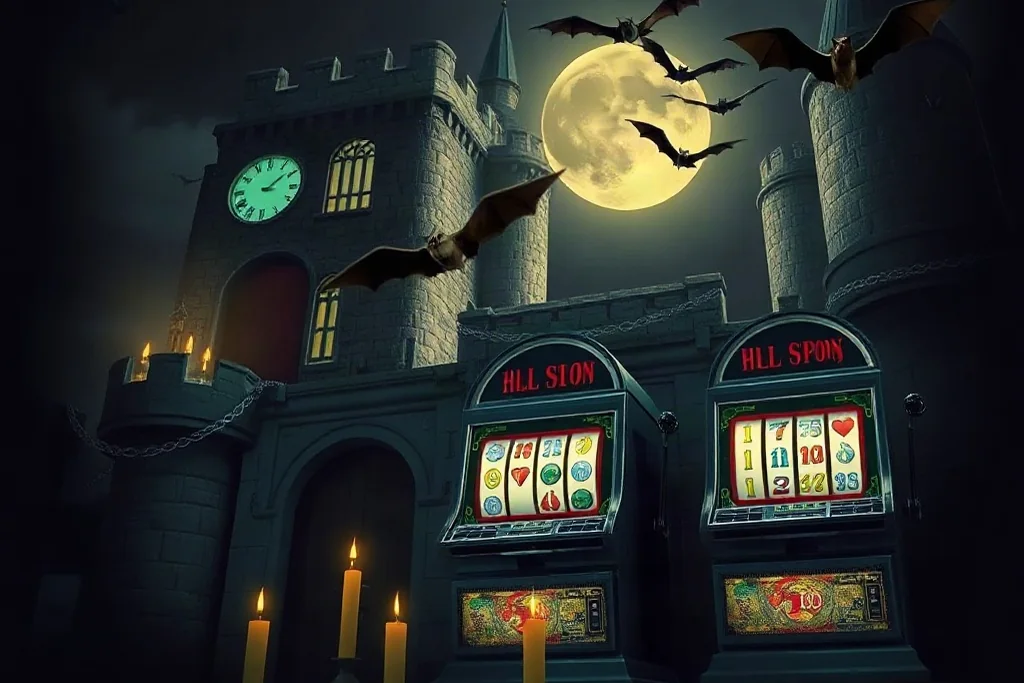
A slot machine is an automated game of chance. You choose a stake, start a spin, and the result is produced by a random process that has no memory of anything that came before. The reels, the stops and the symbols on screen are a presentation of that process, not a strategy board you can learn to outwit.
Understanding the vocabulary around slots — reels, paylines, RTP and volatility — makes the game far easier to read, and it also makes the limits of the game clearer. This guide explains what each term describes and, just as importantly, what it does not promise about your session.
Reels, symbols and stops
A reel is a strip of symbols, and a stop is the position where the reel lands. Modern slots show a grid, but the underlying mechanism is still a set of random stops combined into a result. The number of symbols and the size of the grid affect how often combinations appear, not whether a given spin will win.
Symbols come in two broad families: those that pay on their own and those that trigger or modify features. Wilds substitute for others, scatters trigger bonuses, and the rest simply pay according to the paytable. Reading the paytable once is worth more than any impression formed from a handful of spins.
Paylines, ways and clusters
A payline is a fixed path across the reels where matching symbols count. Some games pay on a fixed number of lines; others pay on ways, where any position in adjacent reels can form a combination; and some pay on clusters, where a group of touching symbols is enough.
The format changes the feel of a game and the frequency of small wins, but it does not change the randomness behind each result. A game with more ways is not more generous by design; it simply distributes returns differently across the grid.
| Term | What it describes | What it does not promise |
|---|---|---|
| Reel | A strip of symbols that spins | Any pattern of future stops |
| Payline | A fixed path where symbols count | A higher chance on that path |
| RTP | Long-run return across many spins | A return in your own session |
| Volatility | How lumpy the returns are | A prediction of the next spin |
RTP: a long-run figure, not a plan
RTP, or return to player, is the share of all staked money a game is designed to return over a very large number of spins. It is a statistical description of the whole, not a promise to any individual. A game with a stated RTP will still produce long losing runs and unexpected winning ones, because that is what randomness looks like in the short term.
Because RTP is measured over millions of spins, it says nothing useful about an evening. It also never implies that a game is "due" after a quiet stretch. The mechanism has no memory, so every spin carries the same distribution regardless of what just happened.
Volatility and the pace of a session
Volatility describes how the returns are spread out. A low-volatility game pays smaller amounts more often; a high-volatility game pays rarely but can pay much more. Neither is better in expectation, and the choice is really about which rhythm you find easier to manage with a fixed budget.
- Low volatility: frequent small returns, gentler swings.
- High volatility: long quiet spells, larger potential returns.
- Stated RTP applies across many spins, not to your session.
- No setting, timing or pattern changes the randomness of a spin.
Features, bonuses and autoplay
Free spins, expanding wilds and bonus rounds are part of the paytable. They trigger according to the game's rules and are as random as the base game. A bonus is a distribution of chance, not extra value added on top, and a long feature is simply a longer sequence of random events.
Autoplay deserves particular care, because it removes the moment-to-moment decision from the session. It does not make the outcome more predictable and it does not slow spending; it simply places the same stake repeatedly without asking. Money moves at the same speed with the button held down as it does without. Setting a limit before any feature or autoplay run begins is the practical way to keep a session inside a plan.
What to check before you spin
Before any session, three numbers are worth knowing: the stake per spin, the stated RTP and the volatility. Together they describe the cost per spin, the long-run return and the rhythm you should expect. None of them tells you what will happen next, but all three describe what you are actually doing.
Stakes, speed and the real cost of a session
The cost of playing a slot is the stake multiplied by the number of spins, and that figure is easier to control than any outcome. A small stake spun quickly can cost more than a large stake spun slowly, which is why the pace of a session deserves as much attention as the size of the bet. The clock and the spin counter, not the symbol grid, are what determine what a session actually costs.
With that in mind, a slot is best read as a priced game of chance with a fixed cost per spin. The entertainment is real, the randomness is real, and the only thing fully under your control is whether, how much and how long you play. Keep that control deliberate and the rest of the game explains itself.
Read next
Table games explained: blackjack, roulette and baccarat
The shared structure of table games and how each one settles a round.
Crash and instant games: how a round runs
Cash-out mechanics, timing pressure and the randomness behind the curve.
Free demo games: what you can learn without staking
How demo mode teaches the controls and why it predicts nothing about real play.